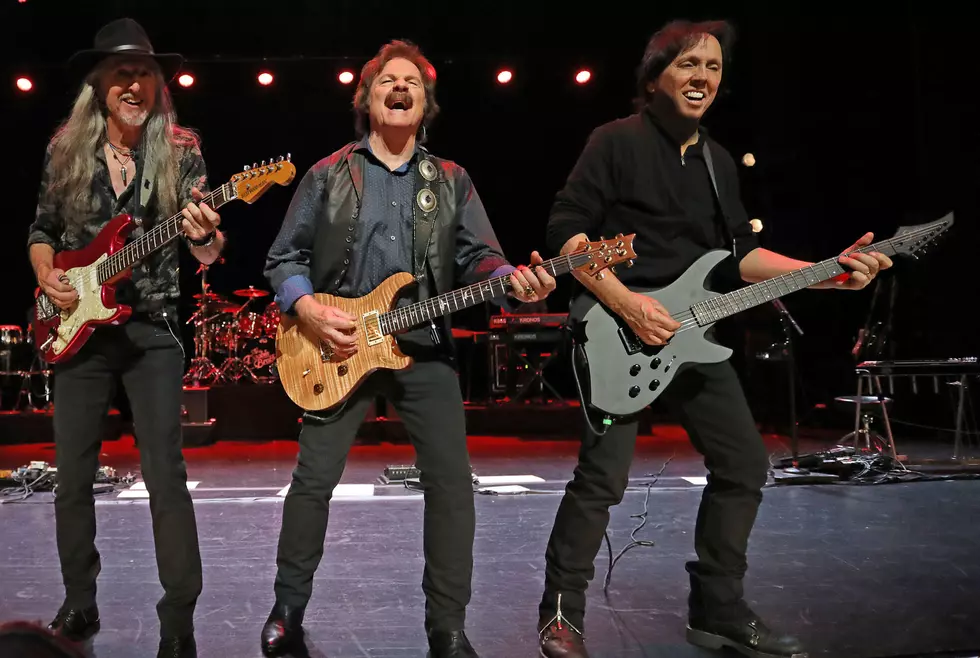
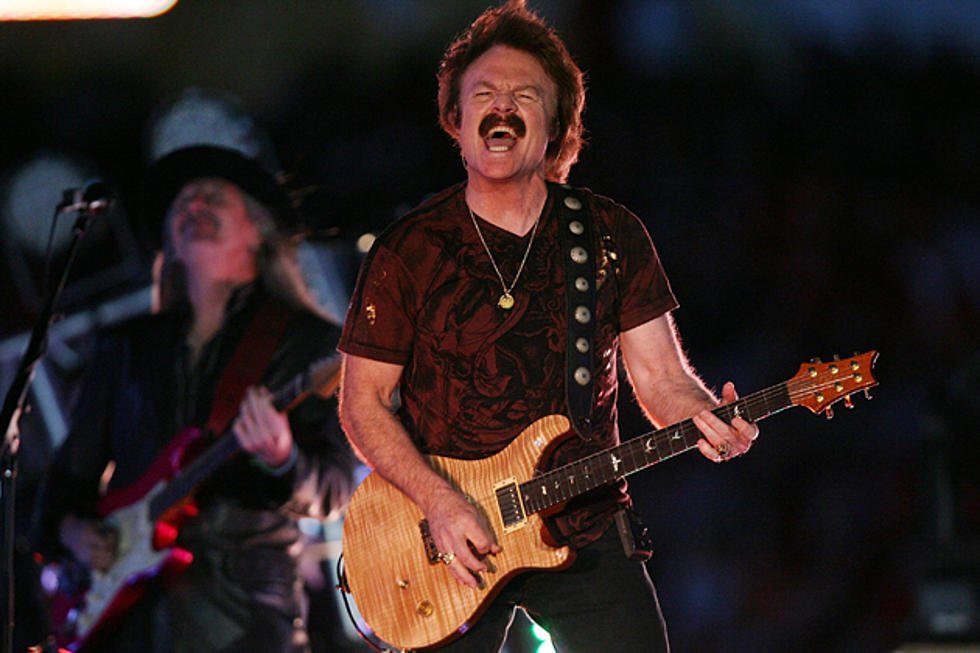
Doobie Brothers’ Tom Johnston Reflects on ‘Listen to the Music’ at 40
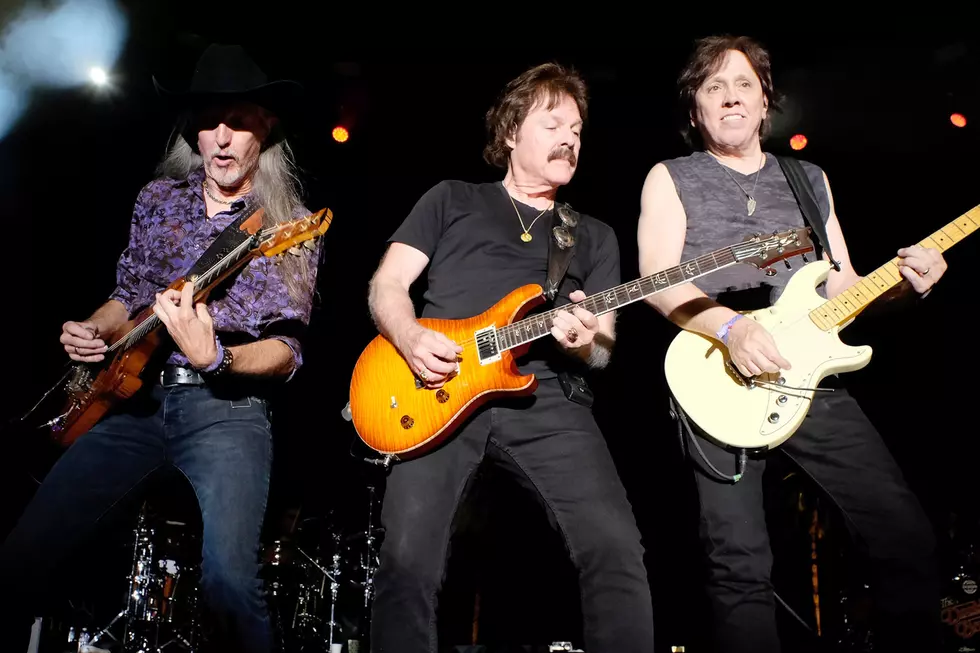
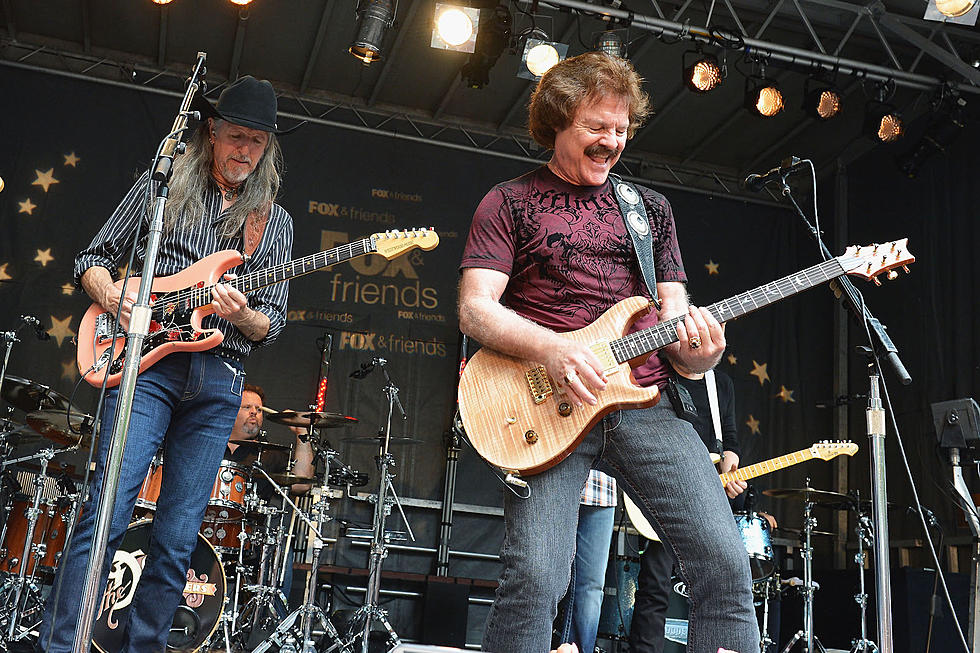
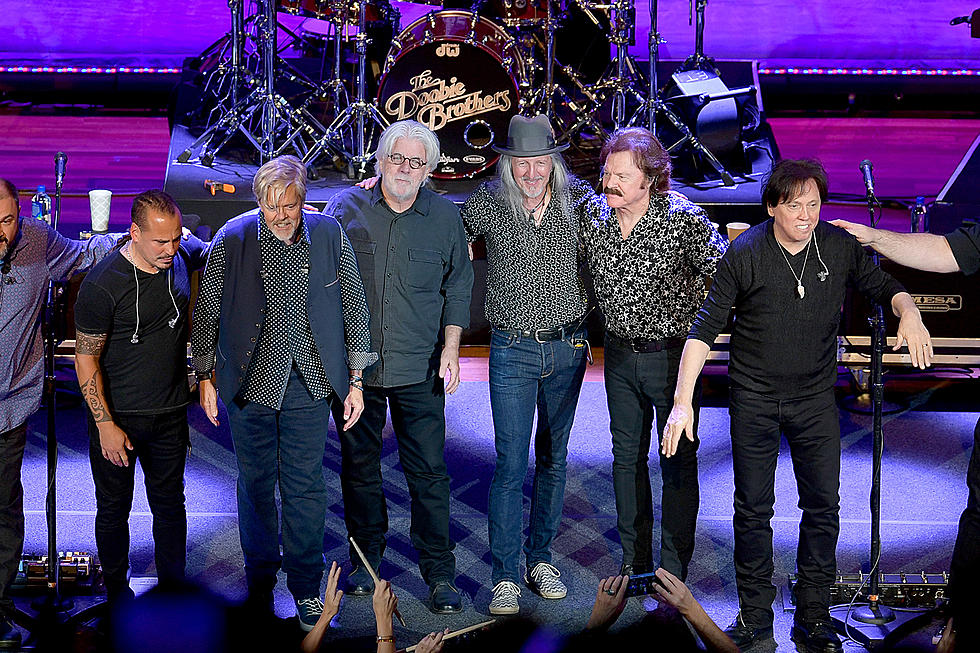
In 1972, the infectious strumming riff that opened ‘Listen to the Music’ introduced fans to the uniquely American sound of the Doobie Brothers. Their blend of rock and R&B produced a string of hits throughout the next decade. At age 40, ‘Listen to the Music’ remains a classic rock radio staple and the Doobies -- with founding members Tom Johnston and Patrick Simmons -- still maintain a busy tour schedule.
Johnston, who wrote ‘Listen to the Music,’ told Ultimate Classic Rock that the musicians around the San Francisco Bay Area helped mold the band’s sound.
What was the influence of the Bay Area on your music in 1969?
The music scene, by the time I got up to San Jose, was centered around the Grateful Dead and Jefferson Airplane and to an extent Moby Grape and the other bands that had pretty much started to fade. Grateful Dead was still a force to be reckoned with, and still is for that matter, because they had such a huge cult following, but the other bands were on their way out.
I played with a lot of guys who were in the Santa Cruz Mountains, a lot of jam sessions, and I also met Skip Spence from Moby Grape early on. Jammed with him quite a bit; he was responsible for putting me together with John Hartman, who was the original drummer in the Doobie Brothers. He put us together because John had come out from Washington, DC looking for people for a Moby Grape reunion.
Moby Grape had a cult following as well, and I was one of the cult. And so was John and so was Pat and so was Tiran [Porter, Doobies’ bassist] and so was everybody else I knew.
What was the influence of the Grape on the Doobies’ music?
They had three-part harmonies, they had guys that were able to fingerpick, they had a driving drummer, they had all these facets that nobody else had. The songs were really good, well-crafted, well-thought-out songs. I love their lyrics, they’re incredible. They weren’t just dumb-headed lyrics.
Unfortunately they burned out really fast but in the small snippet of time they were around, they put out a couple of albums that were just phenomenal. The first one to me has yet to be equaled. I played the grooves off of that one.
What are some of the songs where a listener can hear the Grape influence?
I would say ‘Neal’s Fandango’ is one of them. That song jumps out at me right off the bat because that has a real Moby Grape flavor to it.
What is your writing process? Do you write the music first or the lyrics?
The music is always first for me. People that can write words first and then write music, they’re beyond me. I don’t know how they do it. I’ve had ideas of a lyric but then I still have to go write the track and see how I can fit that lyric into it.
How did you come up with the ‘chunka-chunka’ strumming style?
It was just a way to drive a song. It was a way to have a drummer without a drummer being present. With that kind of strumming, you’re playing drums while you’re playing the rhythm part. I had my foot doin’ the kick drum, the snare drum was in the downbeat on the rhythm and then the rhythmical part was really a cross between all the influences of R&B players I’d listened to for years.
‘Listen to the Music.’ How did you come to write that?
The chord structure of it made me think of something positive, so the lyrics that came out of that were based on this utopian idea that if the leaders of the world got together on some grassy hill somewhere and either smoked enough dope or just sat down and just listened to the music and forgot about all this other bulls---, the world would be a much better place. It was very utopian and very unrealistic (laughs). It seemed like a good idea at the time.
War was raging, the Cuban Missile Crisis, marches, there was a lot of stuff going on then. This was my way of saying, "Really, come on guys, what if you just brought it down a couple of notches and just try to get along?" My version of Rodney King, I guess.
The guitar riff that opens the song is immediately identifiable. Was that the first thing you wrote?
Yes it is, that strumming part that opens the song is just exactly how I wrote it. That is one song, probably the only song, that I didn’t change at all once we got it in the studio. I had all the lyrics, I had all the chord changes. I called Ted [Templeman, producer] up at three in the morning, blazing away on guitar and said, "You gotta hear this. This song is a hit." It’s the only one I’ve ever been right about. That one I flat said, "This is a single."
What was Ted Templeman’s contribution as a producer?
Ted gave us tremendous ideas. He was a very creative producer. He had great drum ideas in particular ‘cause he was a drummer but he would also come up with good singing ideas. The same thing with lyrics.
Most of his stuff was about embellishing what was already there. He would say, what if we put, for example, strings on ‘Dark Eyed Cajun Woman’ or ‘Take Me in Your Arms,’ something like that. Or he took ‘Black Water’ and had Novi [Novog] play that incredible viola part on that.
Patrick comes in to sing the bridge on ‘Listen to the Music.’ It was unusual for the time to have a second lead.
That was Teddy’s idea. I think he wanted to change up. He wanted a difference because in the breakdown, you’ve got the drums that go away from the regular rhythm of the song and so he said, "What if you had Pat sing that part?" I said, "OK, go, it’ll be great." We tried that and it worked really well. So these are the kinds of things that Ted was good for, helping make a song more than it was when he walked in the door.
Do you remember where you were when you first heard it on the radio?
Yeah, I was in my Volkswagen, driving down the road in San Jose. And I remember pulling over and going, "Jesus Christ, that’s us." It was a big deal at that time ‘cause we’d never had any hits, we hadn’t done anything. That was our first song that got notoriety. We followed that up with ‘Rockin’ Down the Highway’ and ‘Jesus Is Just Alright’ on that album. Next album we had ‘China Grove’ and ‘Long Train Runnin’.’
It changed your life financially, I guess.
Yeah, it changed your life financially, it also took your life away (laughs). That’s when you entered the whole era of you gotta have a studio album every year and you could be on the road the rest of the time (laughs). That’s the way everybody did it in those days, I mean, that was just the way it was.
I’d like to ask about two of the songs that followed. What went into writing ‘China Grove’? I looked up China Grove, it’s not really a Chinatown.
Not at all, no. All it has is an ice house and feed store (laughs). It is exactly where it’s written about in the song, it’s right outside of San Antonio. As far as the whole Oriental cast to it, that was all based around a piano lick by Billy Payne. I still hadn’t written the lyrics at that point. We laid the track down, which was unusual back then. We had this great track and he came in and put all the keyboards on it. And when he did that, I went, "Bingo! Oh man, what if … " and then I went off on this whole wackadoodle thing about sheriffs with a samurai sword.
In ‘72 we were touring in Winnebagos. We did play in San Antonio so the highway going into San Antonio has a sign along there that says ‘City of China Grove.’ I didn’t remember seeing it but I think subconsciously I saw it and I think that’s where I got the title.
‘Long Train Runnin’.’ What was your inspiration for writing it?
See, I never thought of that song as being a single. That was a jam song for us. We played that song in late ‘70, early ‘71. And I would make up different words to it every night. And it was called ‘Rosie Pig Moseley,’ it was called ‘Parliament,’ it was called all this other stuff, but it never had a name. Teddy heard us playing it and he said, "God, we should record that." I said, "Really? It’s just a jam song." I really didn’t think it was any big deal.
We got in the studio, laid the track down pretty much like we’d played it live, the cool part being that it had the rhythm structure and had pickin’ over the top of it. More so than probably any of those songs that we did that involved those two styles.
The words were written at the absolute last minute. I wrote them in the bathroom at Amigo Studios. Ted said, "Write something about a train." I said, "OK! That’s a great idea" (laughs).
So I went in -- I used to do that a lot, it’s just a great place to go get away from everything and if you had a singing idea, it had a great natural reverb in there, tile all over the walls. And you’d just sit down and write, just come up with these ideas. And so I wrote the words right there, about Miss Lucy losin’ her family and all that kind of stuff. It just all kind of gelled in that one time and place, which is how a lot of creative things happen.
You’ve got the rhythm part, the ‘chunka-chunka’ thing on electric. Then you’ve got the combination with Pat playing that picking acoustic part over the top of it. ‘Listen to the Music’ is similar; Pat had a picking banjo part on it.
How do you explain the longevity of ‘Listen to the Music’?
I can only give you what I think because I don’t really know. It gets played, number one. Number two, people can very easily sing along with it. And do. We can play that song anywhere, anyplace, any country, and people sing along with the chorus. Even if they don’t speak English, doesn’t matter.
In the old days, you had to have a hook, which was "Wo, wo, listen to the music," as simple as that sounds. And you had to have either a chord change or a groove or both that would grab people. The rhythm pattern was new at that time, not now obviously, but I think that’s one of the things that set it aside.
In the era we’re livin’ in, there’s not a lot of positive things goin’ on, so I have to say that that’s probably one of the things too. Anything that’s positive, people gravitate to. It’s a feel good song. You can play it anywhere and people are gonna respond to it, ‘cause it got all the sunshine. That’s the one that people all know.

More From WWMJ Ellsworth Maine